
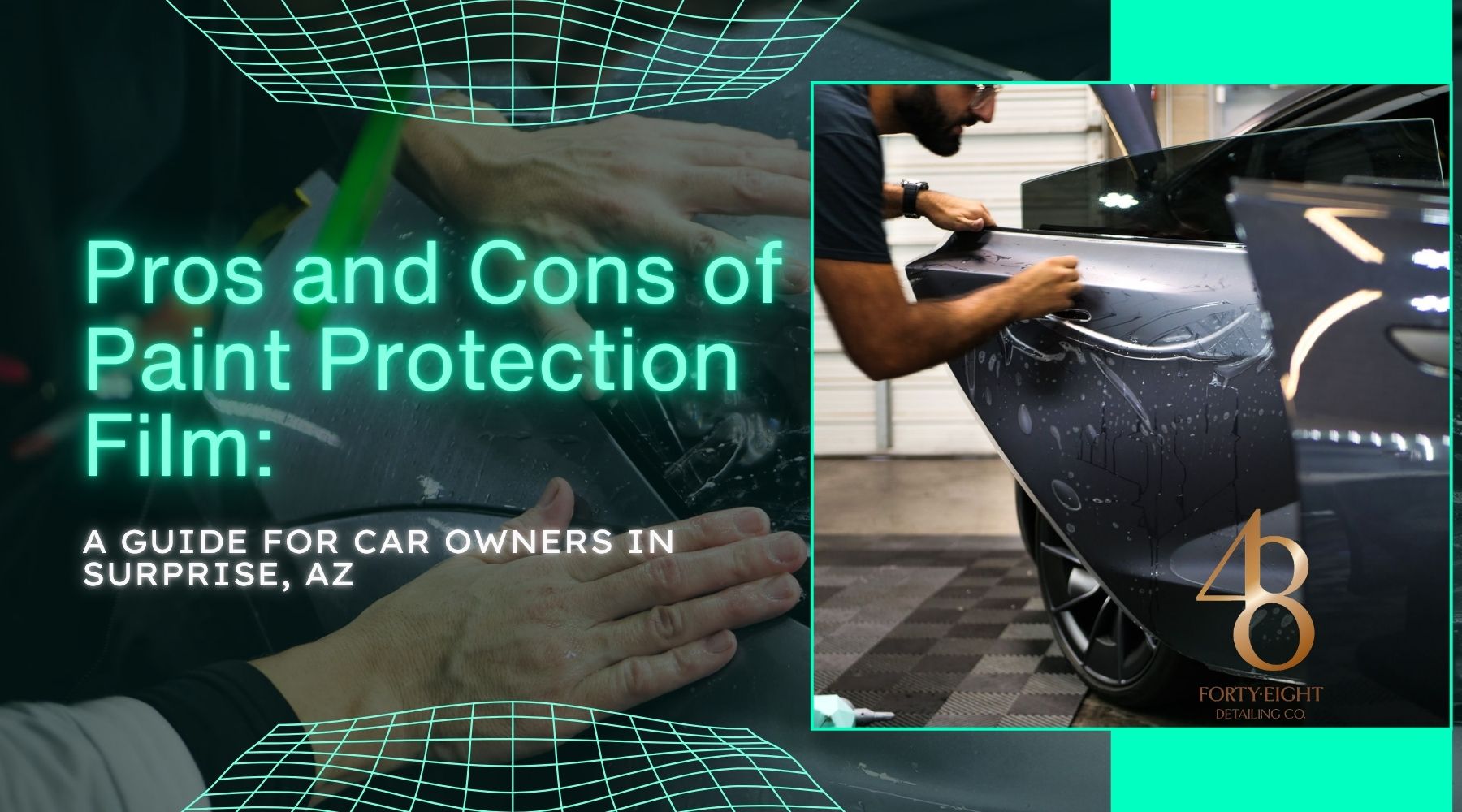
Cruising around Surprise, Arizona, you don’t have to look far to see what the desert does to a car’s finish. The sun bakes it, dust storms sandblast it, and loose gravel, especially after a good monsoon, chips away at the shine. Even cars that get regular washes and wax jobs start showing wear fast. That’s why more and more locals are turning to paint protection film, better known as Clear Bra, to keep their rides looking sharp.
But maybe you’re wondering if it’s worth it for your ride specifically. To help you out, we’ll dive into the main perks, some potential downsides, and whether pairing it with ceramic coatings could offer even better protection. Plus, we’ll share real-life experiences and practical insights from the team at 48 Detailing, who see this stuff every day.
Benefits of Paint Protection Film in Surprise, AZ
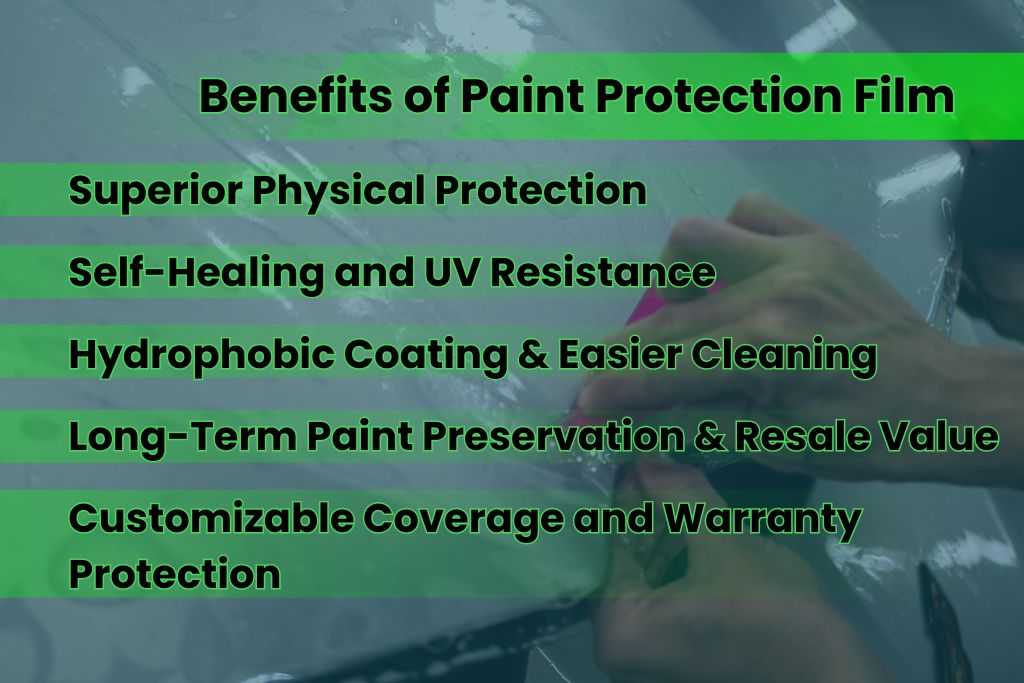
Superior Physical Protection
Out in Surprise, it’s almost impossible to avoid rock chips and flying debris, whether you’re zipping down Loop 303 or kicking up dust on a backroad. Paint protection film acts like a shield, softening the blow from gravel and road junk before it can chew up your paint.
For folks who rack up highway miles or like to roam Arizona’s rougher routes, it’s one of those upgrades that can save a lot of headaches (and touch-up paint) down the road.
Self-Healing and UV Resistance
These days, the good stuff, like the premium film 48 Detailing uses, can actually heal itself. Little scratches and swirl marks just fade away after sitting in the Arizona sun for a bit. It’s also loaded with UV blockers that fight off fading and oxidation, a lifesaver in the kind of relentless Arizona sun that can dull a paint job in no time.
Hydrophobic Coating & Easier Cleaning
Some of the better paint protection films have a super-slick, water-repelling surface that helps dust, bug guts, and road grime just glide off. In the desert, that’s a game changer. You’re not out there with a hose every other day just to keep the car presentable. It stays looking clean longer, which means less scrubbing and more driving.
Long-Term Paint Preservation & Resale Value
If you keep your car’s paint looking good, it can make a noticeable difference when you go to sell or trade it in. A high-quality paint protection film, when cared for, can last five to ten years. That is plenty of time to protect your investment and keep your ride looking like it has been loved, not just driven.
Customizable Coverage and Warranty Protection
You don’t have to cover the whole car with PPF if you don’t want to. Some folks just protect the high-impact spots like the hood, bumper, and mirrors, while others go all-in with a full wrap.
At 48 Detailing, every job comes with a solid 10-year warranty, so if the film ever yellows, cracks, or starts to peel, you’re covered.
Drawbacks and Limitations of PPF
Higher Initial Cost
One major consideration is the upfront cost. PPF installation is typically more expensive than traditional waxes, sealants, or even ceramic coatings. However, it’s best viewed as a long-term investment rather than a short-term expense.
Professional Installation Required
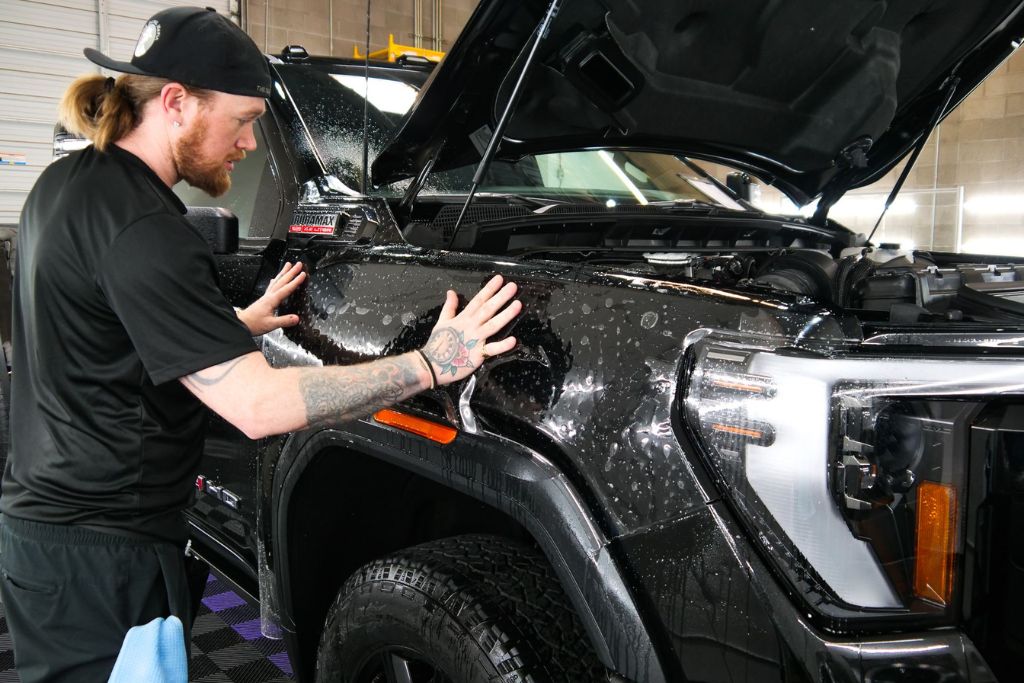
Applying PPF requires expert skill and precision to avoid issues like bubbles, seams, or edge peeling. Poor installation can lead to unsightly imperfections and the need for premature replacement.
Potential for Yellowing or Staining
Lower-quality films may yellow or stain over time, particularly when exposed extensively to the Arizona sun or harsh chemicals. Premium products, like those offered at 48 Detailing, greatly minimize this risk.
Still Needs Maintenance
Though PPF significantly reduces maintenance needs, it isn’t maintenance-free. Regular cleaning and proper aftercare are essential to prolong the film’s life. Avoiding harsh chemicals and abrasive cleaners is key.
Not Invulnerable
Despite its toughness, paint protection film is not indestructible. Strong impacts or sharp objects can still penetrate or damage the film. Eventually, even high-quality films require replacement.
PPF vs Ceramic Coating: Why Combining Them Works Best for Surprise Drivers
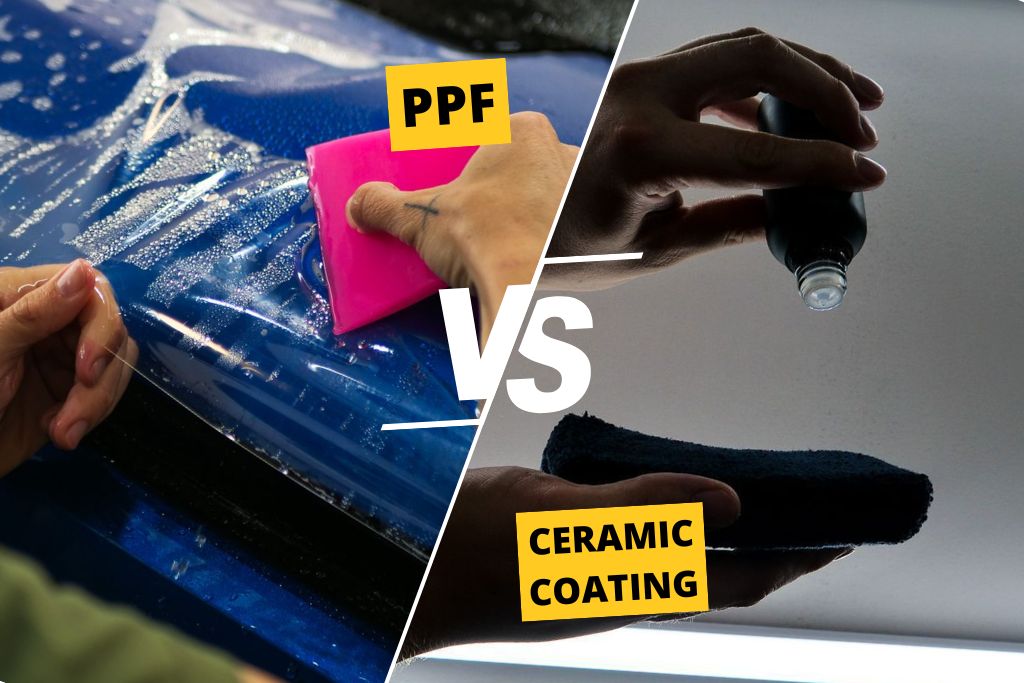
PPF – The Impact Defender
Paint protection film excels at physical defense. Honestly, there’s really nothing better for keeping those annoying chips, scratches, and daily dings at bay. Around Surprise, most folks zero in on the spots that take the worst beating: your hood, front bumper, fenders and mirrors.
It’s like putting extra armor exactly where your ride needs it, so the film eats all the gravel and rogue shopping carts instead of your paint.
Ceramic Coating The Gloss & Chemical Shield
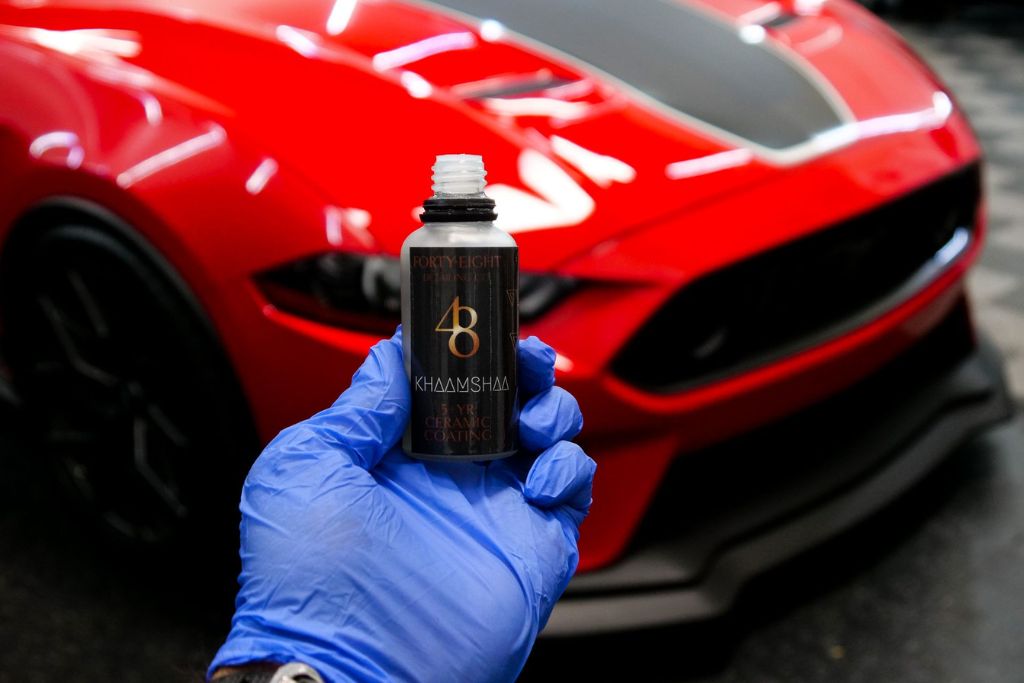
Ceramic coating is basically a whisper-thin shield that keeps your ride looking freshly minted. Out here in Arizona, the sun’s cooking paint faster than you can blink, and every random dust storm or monsoon splash is waiting to leave its mark.
What’s cool is the slick finish means water, dirt, or accidental soda drips just bead up and slide right off. Last week, I literally sprayed down half my driveway before realizing I wasn’t even touching the car. Bottom line: you spend way less time scrubbing and more time admiring that mirror-like shine.
Why One Alone May Not Be Enough
PPF does a solid job of protecting against rock chips and other impact damage, but it will not give your car that extra shine or the chemical and water resistance you get from a ceramic coating. A ceramic coating will keep the paint looking glossy and guard against contaminants, but it is not thick enough to stop chips or deeper scratches.
Driving in Arizona means dealing with both rough roads and brutal weather, so your car needs protection from physical damage as well as the sun, dust, and other environmental wear.
The Winning Combo Layering PPF and Ceramic Coating
For Surprise drivers, combining PPF with a ceramic coating offers optimal protection. By first installing paint protection film on your vehicle’s high-impact zones and then applying a ceramic coating to the entire vehicle, you enjoy:
- Complete protection from chips, scratches, fading, and oxidation.
- Easier maintenance with ceramic’s slick, hydrophobic surface.
- Enhanced visual appeal and longer-lasting paint integrity.
48 Detailing’s Recommended Packages
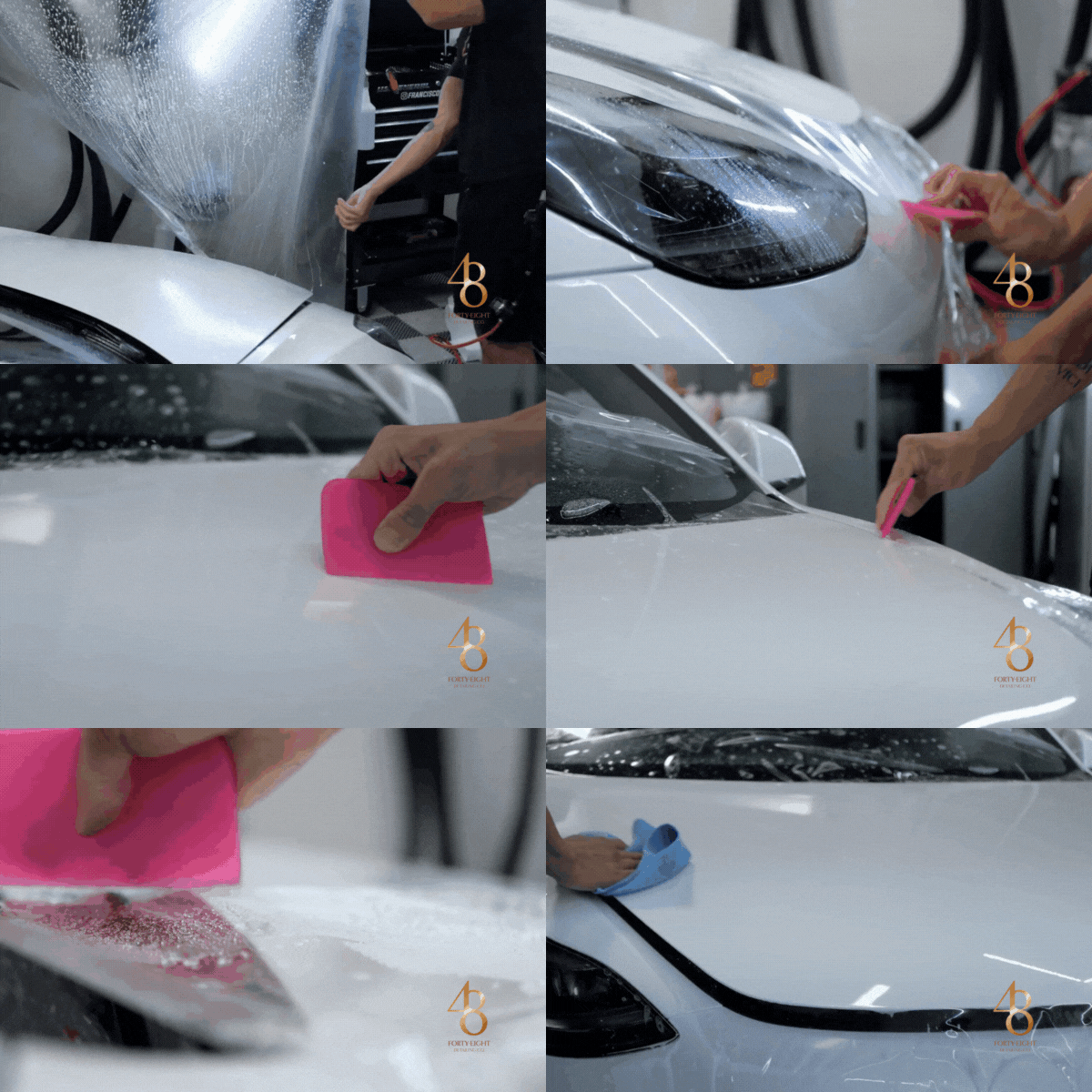
48 Detailing offers tailored packages to fit Arizona driving conditions:
- Bronze: Partial PPF on high-risk areas + full ceramic coating.
- Silver: Full front PPF protection + ceramic coating.
- Gold: Full-vehicle PPF wrap + ceramic coating, ideal for maximum protection.
Each package comes with an extensive warranty and expert local installation.
Conclusion
Understanding the pros and cons of paint protection film empowers you to make the best decision for your car in Surprise, AZ. Given Arizona’s challenging driving conditions, combining PPF with ceramic coating provides the ultimate protection.
Protect your vehicle today book your consultation with 48 Detailing and experience premium automotive care firsthand.
FAQ: People Also Ask
What are the negatives of paint protection film?
PPF can be expensive upfront, requires professional installation, and needs regular maintenance. Inferior films might yellow or stain over time.
Is it worth putting paint protection film on a car?
Absolutely, especially in Arizona’s climate. It protects your car’s paint, maintaining its appearance and resale value for years.
How long does paint protection film last?
With quality installation and care, PPF typically lasts 5–10 years.
Why is PPF more expensive than waxing or coatings?
PPF installation involves premium materials, advanced technology, and skilled labor, making it a more substantial initial investment.
Why combine PPF with ceramic coating?
Combining both offers superior impact protection (PPF) and enhanced gloss and chemical resistance (ceramic coating).
Why do some PPFs yellow over time?
Yellowing usually occurs due to inferior adhesives or prolonged UV exposure, especially if improperly installed.
Why isn’t PPF a permanent solution?
All protective films eventually degrade with use and environmental exposure, requiring periodic replacement.
