
When car owners compare DIY ceramic coating vs professional installation, the biggest difference is risk and consistency. DIY ceramic coating may cost less upfront, but mistakes in preparation, application, or curing can lead to high spots, poor bonding, and extra correction work. Professional installation costs more, but it offers a more controlled process and more predictable results.
That difference becomes even more important because ceramic coating is not just about applying the product. Proper paint preparation, decontamination, polishing, flash timing, and curing all play a role in how well the coating performs.
For drivers in Surprise, Arizona, heat, dust, and hot body panels can make those steps even more challenging. That is why we see DIY ceramic coating vs professional installation as a choice between managing the risks yourself or relying on a professional process designed for consistency.
Ceramic coating results depend heavily on what happens before, during, and immediately after application. Saving on installation can make sense for an experienced DIYer, but correcting uneven coating, contamination, or paint defects later can add more time, labor, and expense.
DIY Ceramic Coating vs Professional Installation: What Is the Real Difference?
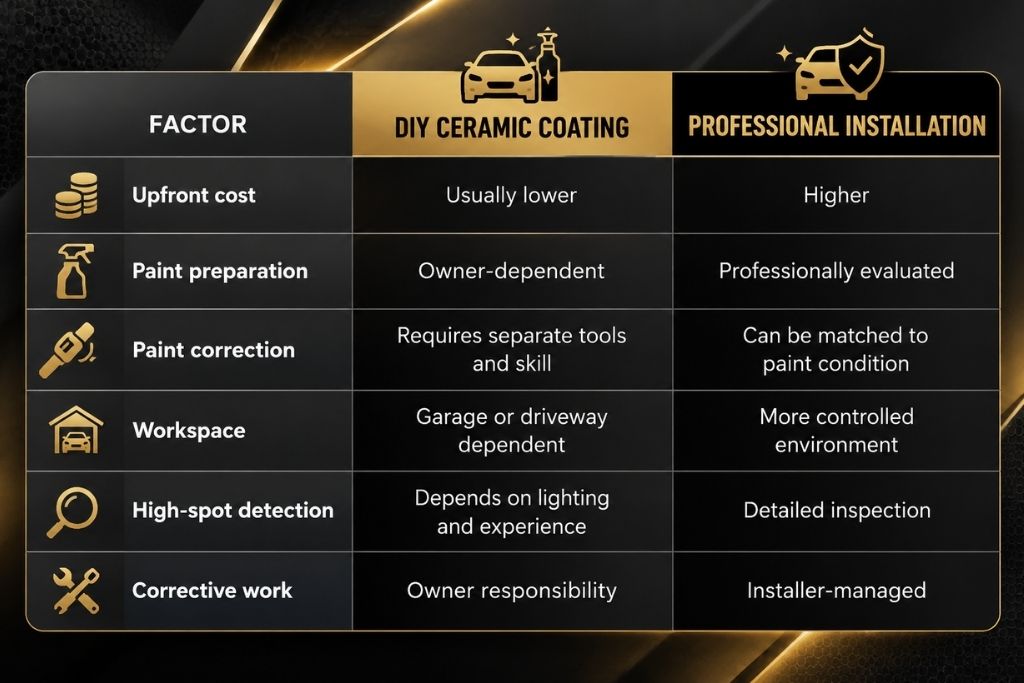
Ceramic coating bonds to the vehicle’s surface to add gloss, hydrophobic protection, and resistance to contamination. But even a high-quality SiO2 coating will not perform well without proper preparation.
With DIY ceramic coating, you handle everything from decontamination and paint inspection to application, flash timing, high-spot checks, and curing. Professional ceramic coating installation follows the same steps, but with better lighting, equipment, and process control.
That consistency is one of the biggest differences in DIY ceramic coating vs professional installation.
Risk #1: Inadequate Ceramic Coating Paint Preparation
One of the biggest risks in DIY ceramic coating vs professional installation happens before the coating ever touches the paint.
A normal wash is not always enough to prepare a vehicle for coating. Depending on the condition of the paint, proper surface preparation may involve chemical decontamination, a clay bar treatment, polishing, paint correction, and a final surface-cleaning step.
A typical preparation process may look like this:
Wash → Decontaminate → Inspect → Polish or Correct → Clean the Surface → Apply the Coating
The goal is to remove anything that could interfere with coating adhesion or affect the finished appearance.
At 48 Detailing, we do not treat ceramic coating installation like a simple wipe-on service. The condition of the paint matters. If the surface has bonded contamination, swirl marks, water spots, or oxidation, those issues need to be identified before the coating goes on.
If you want a deeper explanation of when polishing is necessary, our guide to paint correction before ceramic coating explains why correction should be based on the actual condition of the clear coat rather than performed aggressively by default.
Risk #2: Coating Over Swirl Marks, Scratches, or Water Spots
Ceramic coating protects paint, but it does not fix scratches, swirl marks, haze, oxidation, or water spots. In fact, added gloss can make some defects more noticeable.
This is where DIY ceramic coating vs professional installation goes beyond application. Proper paint correction requires skill because clear coat is limited and should be preserved whenever possible.
If defects are coated over, correcting them later may require polishing away the coating and reapplying it. That is why careful paint inspection and preparation matter before installation.
Risk #3: Ceramic Coating High Spots and Streaks
High spots are one of the most common DIY ceramic coating mistakes. They happen when excess product is not leveled before it starts to cure, leaving dark patches, streaks, rainbowing, or uneven reflections.
Common causes include:
- Applying too much product
- Working on areas that are too large
- Poor lighting
- Missing edges or body lines
- Waiting too long to level the coating
- Applying on panels that are too warm
This is where experience matters in DIY ceramic coating vs professional installation. If a high spot hardens, the area may need machine polishing and recoating, turning a simple DIY project into extra corrective work.
Risk #4: Arizona Heat and an Uncontrolled Workspace
Ceramic coating in Arizona comes with extra challenges, especially in Surprise. Hot panels and direct sunlight can make a coating flash faster, leaving less time to level the product before residue becomes difficult to remove.
Dust is another concern. Open garages and driveways can expose freshly prepared paint to pollen, wind, insects, and airborne debris.
That is why the working environment matters so much in DIY ceramic coating vs professional installation. Even a good product can deliver poor results if the conditions are not controlled.
Risk #5: Incorrect Coating Curing
Flash time and curing time are not the same thing.
Flash time refers to the short period during application when the coating begins to react with the surface and excess product needs to be leveled.
Curing time is the longer period after application when the coating develops its intended properties.
Post-installation mistakes can affect the result. These may include:
- Washing the vehicle too soon
- Allowing sprinklers to hit the paint
- Exposing the coating to water prematurely
- Wiping the surface unnecessarily
- Ignoring product-specific curing instructions
This is another reason why DIY ceramic coating vs professional installation is not simply about who applies the liquid.
The curing process matters too.
A coating needs time to settle and develop its intended performance. That is why we always look at installation as a complete process rather than a single application step.
Why Does Professional Ceramic Coating Usually Last Longer?
Professional ceramic coating often lasts longer because durability depends on more than the coating formula.
Preparation, coating adhesion, even application, curing, maintenance, environmental exposure, and washing habits all affect ceramic coating durability.
This is why we do not believe the DIY ceramic coating vs professional installation discussion should be reduced to “consumer-grade product versus professional-grade product.”
A high-quality product can still underperform if it is applied over contaminated paint or installed under poor conditions. Likewise, a properly prepared vehicle with a carefully applied coating has a better chance of performing as intended.
For car owners who want to understand why the installation process matters, we have covered the subject in more detail in our guide to professional ceramic coating installation in Surprise, AZ.
When Ceramic Coating Alone Is Not Enough
Ceramic coating is excellent for improving gloss, supporting hydrophobic protection, reducing how easily contaminants stick to the surface, and making routine washing easier.
What ceramic coating does not do is replace paint protection film.
Ceramic coating and PPF solve different problems.
Paint protection film provides a physical sacrificial layer designed to help protect high-impact areas from road debris and rock chips. Ceramic coating focuses more on surface protection, gloss, slickness, hydrophobic behavior, and easier maintenance.
For high-performance cars and vehicles that spend a lot of time on highways, using both can make sense.
We explain that combination in more detail in our article about PPF and ceramic coating for Corvette C8s.
How to Reduce DIY Ceramic Coating Risks
If you decide to apply a ceramic coating yourself, preparation and patience matter more than speed.
Here are a few ways to reduce common DIY ceramic coating risks:
- Read the full product instructions before starting.
- Work on cool, clean paint.
- Avoid direct sunlight unless the product specifically allows it.
- Wash and decontaminate the vehicle thoroughly.
- Inspect the paint for scratches, swirls, oxidation, and water spots.
- Correct paint only if you have the right tools and experience.
- Remove polishing residue before applying the coating.
- Work in small sections.
- Pay close attention to coating flash time.
- Use strong inspection lighting.
- Check every panel for high spots before moving on.
- Follow the recommended coating curing process.
- Maintain the coating with safe wash methods.
Ceramic coating application rewards careful preparation. Rushing usually creates more problems than it solves.
DIY vs Professional Ceramic Coating: What Makes Sense for Surprise, AZ Drivers?
For car owners in Surprise, DIY ceramic coating vs professional installation should come down to four things:
What condition is the paint in?
If the paint is already clean, glossy, and defect-free, DIY may be more realistic. If it has swirls, water spots, oxidation, or scratches, professional evaluation becomes more valuable.
Do you have the right workspace?
A clean, shaded, controlled environment is far better than a dusty driveway or hot garage.
Are you comfortable fixing mistakes?
High spots, missed residue, or poor surface preparation can require polishing and recoating.
What level of consistency do you want?
DIY can work well, but professional ceramic coating installation gives you a more controlled process from preparation through curing.
If you want to explore professional options, take a look at our ceramic coating services in Surprise, AZ. We can help you choose a protection package based on your vehicle, paint condition, driving habits, and long-term goals.
Know the Risk Before You Coat
DIY ceramic coating vs professional installation is not simply a choice between saving money and paying more.
It is a choice between managing the entire preparation and installation process yourself or having an experienced team control those variables for you.
A careful DIY installer can achieve good results, especially on paint that is already in excellent condition. But once you add swirl marks, water spots, Arizona heat, dust, high-spot risk, paint correction, and long-term durability into the equation, the job becomes much more technical.
Preparation, paint condition, application timing, workspace, temperature, leveling, and curing all become your responsibility.
An experienced installer can evaluate the paint, prepare the surface, manage application conditions, inspect the finish, and correct issues as part of the installation process.
At 48 Detailing, we focus on preparation, craftsmanship, and long-term paint protection rather than simply applying a product and sending the vehicle out the door.
If you are considering professional ceramic coating in Surprise, Arizona, 48 Detailing can evaluate your vehicle and help you choose an approach based on paint condition, protection goals, and the level of correction your vehicle may need.
Frequently Asked Questions
What is the difference between DIY ceramic coating and professional installation?
The biggest difference is process control. With DIY, the vehicle owner is responsible for preparation, paint inspection, application, flash timing, high-spot detection, and curing. Professional installation adds experience, specialized equipment, better inspection conditions, and a more consistent workflow.
Why does professional ceramic coating usually last longer than DIY ceramic coating?
Professional installation often produces more predictable ceramic coating durability because surface preparation, coating adhesion, application, and curing are handled in a controlled process. Product quality matters, but the installation process matters just as much.
Why is paint preparation so important before applying ceramic coating?
Ceramic coating bonds best to a properly cleaned and prepared surface. Paint decontamination removes bonded contaminants, while polishing or paint correction can improve defects before they are covered by the coating.
What happens if ceramic coating is applied over scratches, swirl marks, or contamination?
Those defects do not disappear. Scratches and swirls usually remain visible, while contamination can affect the finish or coating adhesion. Correcting the problem later may require polishing the coating away first.
