
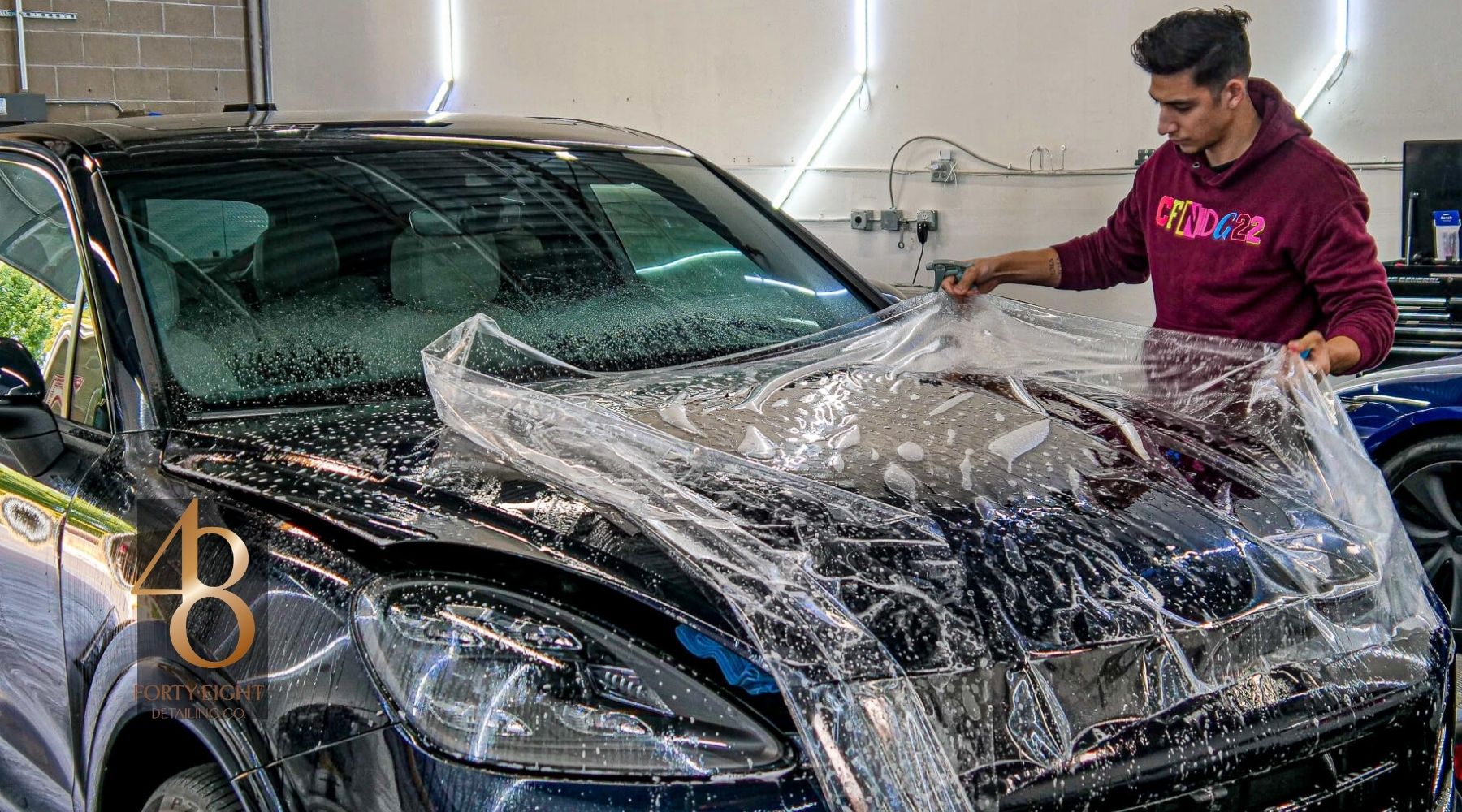
Car PPF maintenance in Surprise, AZ should include shaded hand washing every one to two weeks, prompt removal of bugs and bird droppings, immediate drying after water exposure, and regular film inspections. Using pH-neutral shampoo, soft microfiber tools, and PPF-safe products helps prevent water spots, staining, edge damage, and premature wear during Arizona’s hottest months.
At 48 Detailing, we work with paint protection film every day, so we see first-hand how quickly local summer conditions can challenge a vehicle’s exterior. Strong sunlight, extreme desert heat, fine dust, hard water, road debris, and baked-on contaminants can all build up faster than many drivers expect.
Because of this, the way you clean and care for your PPF matters just as much as the film itself. Paint protection film is designed to protect your vehicle’s factory paint, but it is not maintenance-free. Improper washing, delayed contaminant removal, and poor drying habits can affect the film’s clarity, appearance, and long-term performance.
That is why a simple, consistent care routine makes such a difference. In the sections below, our team explains how to maintain PPF during an Arizona summer, which products and cleaning methods to avoid, how long quality film can last, and when it is best to request professional help.
Why Does Car PPF Maintenance in Surprise, AZ Matter More During Summer?
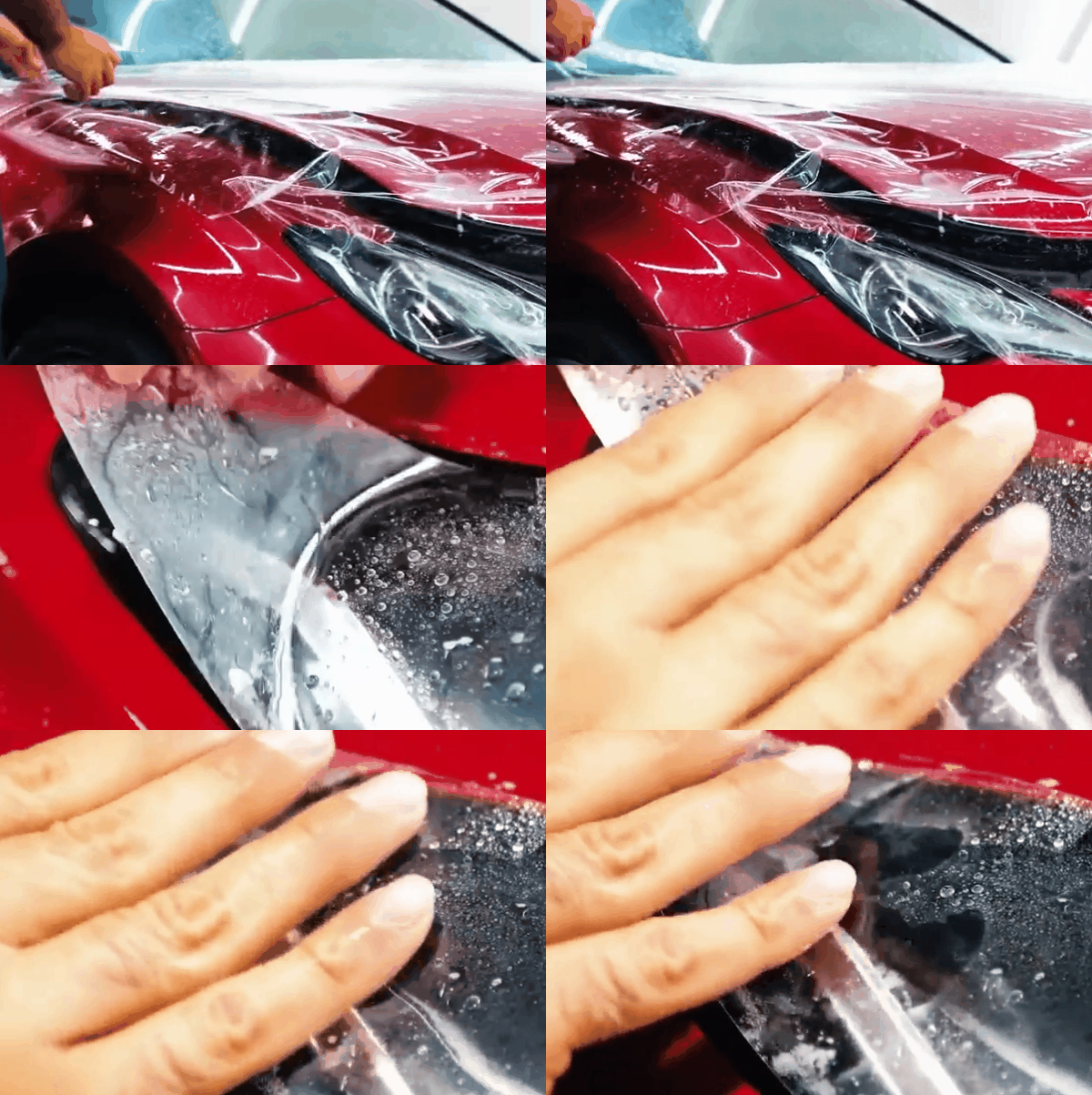
Arizona summers create several challenges at the same time.
Vehicle panels become extremely hot in direct sunlight. Water evaporates quickly, soap dries faster, and contaminants can bake onto the surface. Fine desert dust also settles on horizontal panels and may act like an abrasive when it is wiped away without proper rinsing.
The most common summer concerns we see include:
- Mineral water spots from sprinklers and hose water
- Bug splatter dried onto front-end panels
- Bird droppings left on hot film
- Dust being wiped from a dry surface
- Film edges damaged by aggressive washing
- Residue from unsuitable soaps and cleaners
- Stains that were scrubbed instead of softened
These problems are often preventable. Good PPF care in Surprise, AZ is less about using complicated products and more about using the correct process consistently.
Our paint protection film services in Surprise are designed for local driving conditions, but even premium film performs best when the owner follows sensible aftercare.
how-often-should-you-wash-a-ppf-covered-vehicle-in-summer
For most daily drivers, we recommend washing a PPF-covered vehicle every one to two weeks during summer.
That is a practical starting point, not a rigid rule. A garage-kept weekend vehicle may need less frequent washing, while a daily driver parked outdoors may need attention sooner.
Wash the vehicle promptly after:
- A dust storm
- Monsoon rain
- Sprinkler overspray
- Heavy highway driving
- Bug accumulation
- Bird droppings
- Tree sap exposure
- Construction-zone driving
- Mud or road grime
Leaving contamination on the surface through several hot days can make it more difficult to remove safely. Frequent washing also lets you inspect the film before a small concern develops into a larger one.
Why Should You Wash PPF in the Shade?
Always wash paint protection film in a garage, under a carport, inside a covered wash area, or during a cooler part of the morning.
Washing in direct sunlight creates two avoidable problems.
First, shampoo can dry before you rinse it away. Second, water can evaporate and leave mineral deposits on the film.
Before washing, place the back of your hand against the bonnet or roof. If the panel feels uncomfortably hot, allow the vehicle to cool.
A cooler surface gives you enough working time to wash, rinse, and dry each section properly.
What Is the Safest Way to Wash Paint Protection Film?
A careful hand wash is usually the safest choice for car PPF maintenance in Surprise, AZ because it gives you control over the products, tools, and pressure touching the film.
Here is the process we recommend.
Step 1: Rinse Away Loose Desert Dust
Never begin by wiping a dusty vehicle.
Dust and sand can collect around the front bumper, lower doors, rocker panels, rear bumper, and wheel arches. When these particles are trapped beneath a towel or wash mitt, they may leave light marks in the film’s topcoat.
Rinse the vehicle thoroughly from top to bottom before making physical contact with the surface.
Give extra attention to:
- The front bumper and grille area
- Side skirts and rocker panels
- Lower door sections
- Areas behind the wheels
- The rear bumper
- Panel gaps and trim lines
The goal is to remove as much loose contamination as possible before hand washing begins.
Step 2: Use a pH-Neutral Car Shampoo
Choose a pH-neutral automotive shampoo that is labelled as safe for paint protection film, vinyl wraps, or coated vehicles.
A suitable shampoo provides lubrication between the wash mitt and the film. This helps loosen dirt without unnecessary friction.
Avoid using:
- Dishwashing liquid
- Household multipurpose cleaners
- Strong degreasers
- Abrasive cleaning powders
- Harsh solvents
- Unverified stain removers
- Products containing aggressive polishing agents
A strong cleaner is not automatically a better cleaner. In our experience, many maintenance problems begin when an owner uses a product designed for a different surface.
When you are uncertain about compatibility, ask your installer before applying it.
Step 3: Use Soft, Clean Microfiber Tools
Use a plush microfiber wash mitt and clean microfiber towels. Apply light pressure and let the shampoo do the work.
Begin with the roof and upper panels, then move towards the lower areas where heavier dirt accumulates.
A two-bucket washing method can reduce the amount of contamination returned to the film. Keep shampoo solution in one bucket and clean rinse water in the other. Rinse the mitt regularly.
Wheel tools should always remain separate. Brake dust and gritty wheel contamination should not be transferred to your vehicle’s bodywork.
Step 4: Rinse and Dry the Film Immediately
Once the vehicle is clean, rinse away all shampoo and dry the film before the remaining water evaporates.
Use a soft microfiber drying towel or filtered air. Avoid dragging a heavy towel forcefully across seams and corners.
Take extra care around:
- Exposed film edges
- Wing mirrors
- Badges and emblems
- Trim pieces
- Door handles
- Panel gaps
- Wrapped corners
Prompt drying is particularly important in Surprise because untreated hose water can leave hard-water deposits within a short period on a hot day.
How Should Bugs and Bird Droppings Be Removed From PPF?
Bug splatter and bird droppings should be removed as soon as practical.
During summer, these contaminants can dry firmly onto the film. Trying to scrub them away while dry increases the risk of damaging the topcoat.
Use this gentle method:
- Move the vehicle into the shade.
- Soak the affected area with clean water or a PPF-safe cleaner.
- Allow the contamination time to soften.
- Lift it gently with a damp microfiber towel.
- Wash the area with pH-neutral shampoo.
- Rinse and dry it completely.
Do not scrape residue away with a fingernail, plastic card, rough sponge, or abrasive pad.
If a mark remains after safe cleaning, stop before repeated rubbing makes it worse. Persistent staining is a good reason to contact our team for an inspection.
For more advice on this specific issue, read our guide to protecting your vehicle from bird-dropping damage.
How Can You Prevent Hard-Water Spots on PPF?
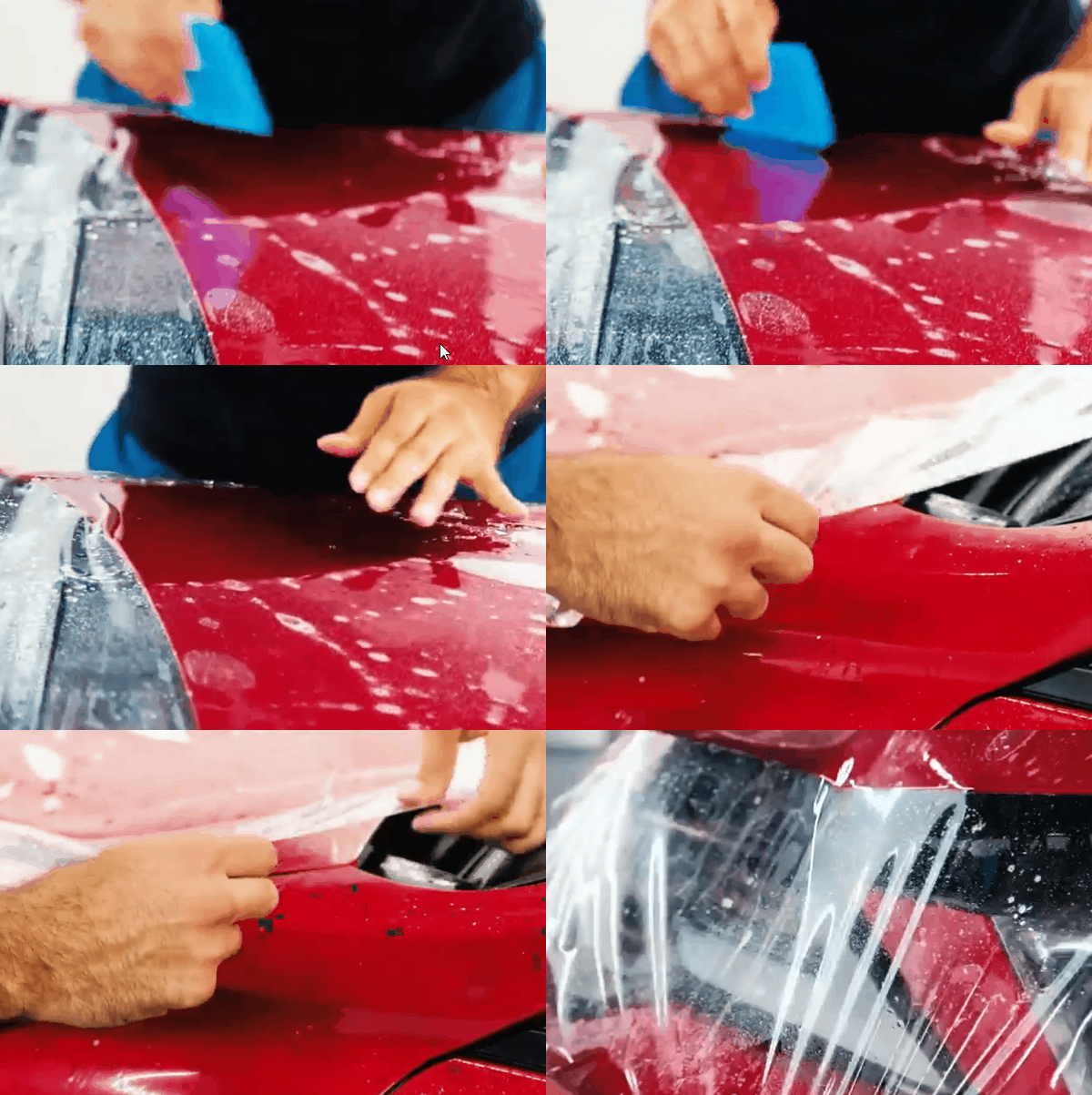
Hard-water spots form when water evaporates and leaves minerals behind.
In Surprise, common sources include garden sprinklers, irrigation overspray, hose water, automatic washes, and water left on the vehicle after cleaning.
Horizontal surfaces such as the bonnet and roof are particularly vulnerable because water can remain there longer.
To prevent mineral water spots:
- Avoid parking near active sprinklers.
- Dry the vehicle immediately after washing.
- Remove fresh overspray before it dries.
- Wash during cooler parts of the day.
- Use filtered or deionised water when available.
- Maintain a compatible hydrophobic topcoat.
- Do not let rinse water air-dry.
How Should Water Spots Be Removed From PPF?
Start with the least aggressive method.
Move the vehicle into the shade, allow the surface to cool, and wash it with pH-neutral shampoo. Rehydrate the deposits instead of rubbing them while dry.
If the spots remain, use a water-spot remover confirmed to be safe for your film. Follow the product directions and test it in an inconspicuous location first.
Do not immediately reach for a polishing compound. Paint protection film is not the same as factory clear coat, and aggressive correction can alter its appearance or damage its top layer.
Water spots that appear etched, cover a large area, or do not respond to safe washing should be professionally assessed.
Owners dealing with frequent spotting may also benefit from reading how ceramic coating helps manage water spots in Arizona.
Can Arizona Heat Damage Paint Protection Film?
Quality paint protection film is manufactured for outdoor automotive use, but no exterior product is immune to poor care, physical damage, or long-term environmental exposure.
Arizona heat does not automatically ruin properly installed PPF. However, a combination of strong UV exposure, neglected contamination, improper washing, damaged edges, and unsuitable chemicals can affect the film’s appearance and service life.
Covered parking is one of the easiest ways to reduce unnecessary exposure.
A garage or carport can:
- Limit prolonged direct sunlight
- Keep body panels cooler
- Reduce dust accumulation
- Protect against bird droppings
- Reduce sprinkler exposure
- Make washing safer and easier
Shade can also help, but consider what is above the vehicle. A tree may lower the panel temperature while exposing the film to sap, pollen, and birds.
A vehicle cover can be useful during long storage periods, but only place it over a clean car. Pulling a cover across dusty film can create fine surface marks.
What Does Self-Healing PPF Actually Repair?
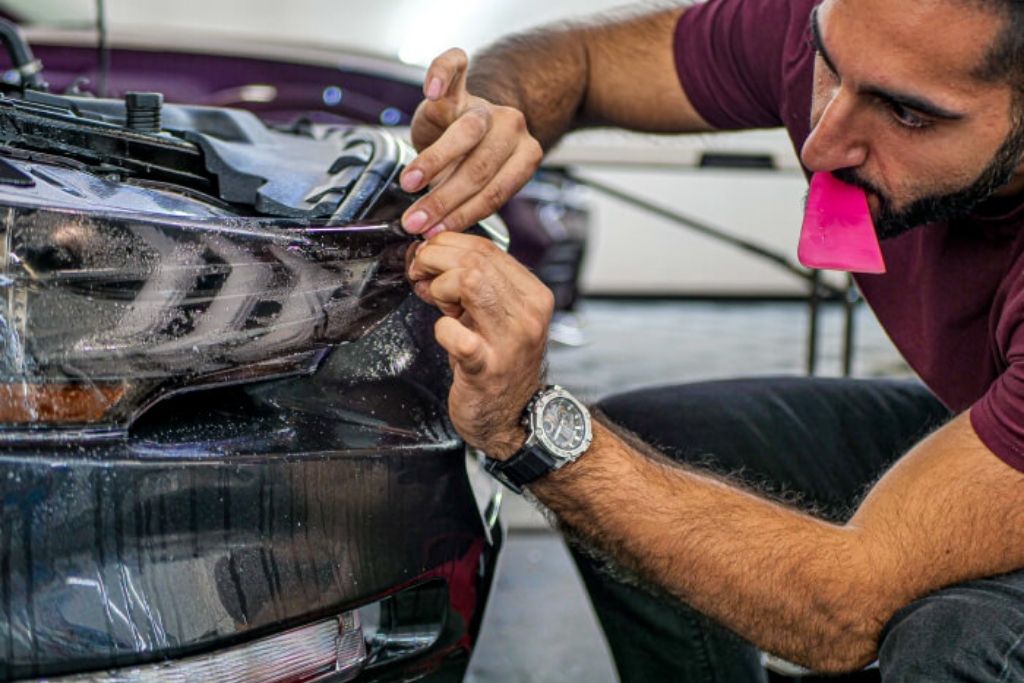
Many premium films include a self-healing topcoat. Warmth can help light surface marks relax and become less visible.
This feature is useful, but realistic expectations matter.
Self-healing PPF may improve fine marks in the top layer. It will not repair:
- Deep scratches
- Cuts
- Stone punctures
- Tears
- Chemical stains
- Lifted edges
- Damaged adhesive
- Heavily abraded areas
We do not recommend applying a heat gun or pouring extremely hot water over the film without professional guidance. Too much heat, especially around an edge or damaged section, may create a larger problem.
When a mark does not improve naturally, let an experienced installer inspect it before attempting a DIY repair.
Can You Use an Automatic Car Wash With PPF?
We generally recommend careful hand washing instead of an automatic brush wash.
Rotating brushes may hold grit collected from other vehicles. They can drag that contamination across the film repeatedly, causing surface marring.
A brush may also catch:
- An exposed corner
- A vulnerable seam
- A lifted edge
- Film surrounding a badge
- A previously damaged section
Touchless washes avoid direct brush contact, but they may rely on stronger chemicals. They can also leave water behind, increasing the chance of mineral spotting.
For regular paint protection film maintenance, a controlled hand wash gives you the best opportunity to protect the surface and inspect it while cleaning.
Is a Pressure Washer Safe for PPF?
A pressure washer can be used carefully.
Choose a broad fan pattern, maintain a sensible working distance, and avoid directing concentrated pressure beneath film edges.
Never aim high pressure directly at:
- Seams
- Corners
- Lifted sections
- Punctures
- Wrapped edges
- Badges or trim
- Recently installed film before the recommended curing period has passed
Spray across an edge rather than into it.
If an edge begins lifting, do not trim it, glue it, or push contamination underneath. Professional inspection offers a better chance of correcting the issue cleanly.
Should You Apply Ceramic Coating Over PPF?
A compatible ceramic coating can be applied over paint protection film to make routine care easier.
Ceramic coating can increase slickness and water repellency, helping dust, bug residue, and road grime release more easily during washing. It may also enhance gloss and improve resistance to some environmental contamination.
However, ceramic coating and PPF serve different purposes.
PPF provides a physical barrier against:
- Stone chips
- Road debris
- Light abrasions
- Minor impacts
- Scratches
Ceramic coating primarily supports:
- Easier washing
- Hydrophobic behaviour
- Surface slickness
- Gloss enhancement
- Chemical resistance
One does not replace the other.
Our team often recommends combining protection methods when they suit the vehicle, driving habits, ownership plans, and maintenance expectations. We do not believe every driver automatically needs the most extensive package.
A garage-kept weekend vehicle may need a different solution from a daily commuter travelling through construction zones or spending hours on Loop 303.
You can compare the two options in our guide to paint protection film versus ceramic coating for Arizona drivers. We also explain the layered approach in more detail in our article about applying ceramic coating over paint protection film.
What Should You Inspect During Summer PPF Maintenance?
We recommend inspecting your film at least once a month, ideally after a thorough wash and dry.
Clean film is easier to assess because dust and residue are no longer hiding the surface.
Look for:
- Lifting around seams or corners
- Cuts, tears, or punctures
- Persistent water spots
- Cloudy areas
- Staining
- Unusual discolouration
- Debris collecting along an edge
- Areas that feel rough after washing
- Reduced water repellency
- Damage on high-impact panels
Pay close attention to the front bumper, bonnet, wing mirrors, rocker panels, lower doors, and rear wheel areas.
From our experience at 48 Detailing, addressing an edge concern early is usually preferable to waiting until dirt and moisture have collected beneath a larger section.
When Should You Request a Professional PPF Inspection?
Contact a professional installer when:
- An edge begins to lift
- A stain remains after safe cleaning
- The film has been cut or punctured
- A panel appears cloudy or discoloured
- Water spots look etched
- Contamination is trapped near a seam
- You are unsure whether a product is PPF-safe
- The film no longer cleans or behaves normally
Professional assessment does not always mean replacing an entire installation. Depending on the location and severity, a localised section may be easier to address.
You can view examples of vehicles we have protected in our automotive protection gallery.
What Are the Most Common Summer PPF Care Mistakes?
Most maintenance damage comes from technique rather than ordinary driving.
Washing a Hot Vehicle
Hot panels cause shampoo and water to dry too quickly, leaving residue and mineral deposits.
Wiping Dry Dust
Moving a towel across dusty film can drag abrasive particles over the surface.
Scrubbing Baked-On Contamination
Bug splatter and bird droppings should be softened before removal, not attacked with pressure.
Using Household Chemicals
Products made for dishes, floors, or general household cleaning may not be compatible with automotive film.
Ignoring Lifted Edges
A small lifted edge can collect contamination and become harder to correct.
Using Abrasive Polish Without Guidance
PPF has its own topcoat and should not automatically be polished like factory paint.
Assuming PPF Requires No Maintenance
Paint protection film reduces the risk of paint damage, but it still requires washing, drying, and inspection.
Why Trust 48 Detailing With Your Vehicle’s PPF?
We are a local Surprise team specialising in paint protection film, ceramic coatings, automotive detailing, and window tinting.
We work with Arizona vehicles and Arizona conditions every day. That first-hand experience matters because the challenges here are different from those in cooler or wetter climates.
We understand how quickly sprinkler water can dry on a bonnet, how desert dust settles into seams, and how road debris affects high-impact areas on daily-driven vehicles.
Our recommendations are based on the vehicle in front of us. We consider how you drive, where you park, how long you plan to keep the vehicle, and how much maintenance you are comfortable performing.
Sometimes full-body PPF is the right solution. For other owners, targeted coverage on the most vulnerable panels makes more sense. Our goal is to explain the trade-offs honestly so you can choose protection that fits your needs.
Learn more about our team and approach on the 48 Detailing About Us page.
Protect Your PPF Through Every Surprise, AZ Summer
Consistent car PPF maintenance in Surprise, AZ helps protect the clarity, appearance, and performance of your film through intense heat, dust, hard water, and daily road exposure.
Wash in the shade, use PPF-safe products, remove contaminants promptly, dry the vehicle completely, and inspect vulnerable areas regularly. Avoid aggressive chemicals and shortcuts that can turn a manageable issue into permanent damage.
At 48 Detailing, we help Surprise drivers choose, maintain, and protect their vehicles with recommendations based on real local conditions and individual ownership needs.
Review our paint protection film options, browse our recent vehicle protection work, or request a free quote from our Surprise team to discuss the right next step for your vehicle.
Frequently Asked Questions About Car PPF Maintenance in Surprise, AZ
How Often Should I Wash PPF During an Arizona Summer?
Wash every one to two weeks as a starting point. Clean it sooner after dust storms, sprinkler exposure, bug accumulation, bird droppings, monsoon rain, or heavy highway driving.
Why Is pH-Neutral Shampoo Recommended for PPF?
A pH-neutral automotive shampoo cleans without relying on unnecessarily harsh acidic or alkaline ingredients. It also provides lubrication, reducing friction between the wash mitt and film.
Can Arizona Sun Make PPF Turn Yellow?
Modern premium films are engineered to resist discolouration, but quality, installation, age, contamination, maintenance, and long-term exposure all affect appearance. Unusual yellowing or cloudiness should be inspected professionally.
Does Ceramic Coating Make PPF Last Longer?
A compatible coating can make the surface easier to clean and help reduce contamination buildup. It does not prevent punctures, edge damage, or all forms of wear, so regular maintenance is still necessary.
